The Vision
Entrepreneurship is learned by building. We give high-school students the mentorship and the real-world challenges to turn an idea into a solid business plan to grow into confident future leaders.
High-school students form a team, work alongside local business leaders, and turn one idea into a solid business plan across a single school year.
Teams of four or five are each paired with a local business leader who mentors them from first idea to a solid business plan. Across the year they work through the six steps every startup takes, and on the final Saturday, they pitch the result to a panel of judges.


Entrepreneurship is learned by building. We give high-school students the mentorship and the real-world challenges to turn an idea into a solid business plan to grow into confident future leaders.
VLC Young Entrepreneurs is led by a diverse group of parents, executives, and founders who share one goal: fostering an entrepreneurial spirit in young future leaders.
We’re building a community that connects young, aspiring entrepreneurs with the experienced founders who have built companies of their own.
One school year, one solid business plan: here is how the year is shaped.
Every session keeps the same two-hour shape, whether you join as a student building a business plan or a mentor guiding a team. The time splits into four compressed blocks:
A guest founder opens with the honest version of their journey: the setbacks and wrong turns, not just the wins.
A focused teaching session on that Saturday’s topic: one idea taught well, from spotting a problem to
pricing a product.
Students put the lesson to work right away with a short, practical exercise tied to their own startup idea.
Teams regroup to push their own business plan forward, applying what they just learned with mentors close by.
Beyond the sessions, every team meets its dedicated mentor on a regular cadence, roughly every two weeks, for guidance as the business plan takes shape.
Each student holds a defined role, so everyone owns a real part of the project:
Any high-school student curious about entrepreneurship, business, or building something real. Open to students from any school across the Valencia area. Beyond business, students build skills they’ll keep long after the final pitch: teamwork and communication, using AI responsibly, building a personal brand online, and social responsibility, always with a focus on solving real problems.
€70 / per month
For the full school-year program,
September to June.
Every team walks the same arc:
from a shared interest in September to a
final pitch in June.
Find three or four classmates who care about the same kinds of problems you do. Your team is who you’ll build alongside all year.
Choose one real problem worth solving and shape the product or service your team thinks could fix it.
Get out and interview the people you’re building for, then let what they tell you sharpen the business plan.
Build a rough first version you can put in real hands, and pay close attention to where it breaks.
Work out how the idea actually makes money, then turn the whole story into a pitch deck.
Stand up on the final Saturday and pitch everything you’ve built to a panel of judges.
Students meet the cohort, mentors, and program team, and learn how the year ahead is structured. We set expectations, introduce the six steps of building a startup, and kick off the entrepreneurial mindset. Teams begin to form around shared interests and passions.
Students get a clear picture of what entrepreneurship really is and why a strong founding team matters more than any single idea. Through structured activities, participants find collaborators whose skills complement their own. By the end of the session, teams of four to five begin to take shape.
Students learn to tell a real business opportunity from a passing idea. We look at how successful founders spotted gaps worth pursuing and sized up their potential. Teams start a running list of opportunities they care about.
We explore how founders think differently about risk, failure, and opportunity, and why resilience matters more than any single idea. Students also learn practical mindfulness and stress-management tools to stay steady through the year ahead. Teams reflect on the mindset shifts they will need to thrive.
Teams learn what separates a great problem from a merely interesting one, then choose the one they will spend the year solving. We introduce frameworks for
moving from a clear problem to a focused solution. Each team commits to a direction and a working hypothesis.
Students learn structured brainstorming techniques used by real product teams.
We push past obvious answers toward more original solutions. Teams sketch several possible versions of their idea.
Teams articulate exactly what value their solution delivers and to whom. We introduce the value proposition canvas as a working tool. Each team drafts a one-sentence statement of what they do and why it matters.
Students learn to size a market and map who else is solving the same problem. We discuss how competition validates rather than kills an idea. Teams research their landscape and find their angle.
Teams work hands-on with their assigned mentors to pressure-test their solution. Mentors share where similar ideas succeed or struggle in the real world. Each team leaves with a sharpened concept.
Students learn why talking to potential customers beats guessing in a room. We cover the most common founder mistake: building before listening. Teams identify who their first customers actually are.
We teach how to ask questions that reveal real needs instead of polite encouragement. Students practice interview techniques on each other and on mentors. Teams prepare an interview script to use in the field.
Teams return with what they heard and learn to find patterns in the noise. We separate signal from flattery and surprise from confirmation. Each team refines its business plan based on real input.
Students translate customer insight into concrete changes to their concept. We revisit the value proposition and adjust based on evidence. Teams document what they learned and what they changed.
Teams present their progress so far to peers and mentors in a low-stakes setting. We celebrate momentum and surface challenges before the winter break. Constructive feedback sets up a strong second half.
No session · Christmas break
No session · New Year break
A flexible studio day for teams to catch up after the break, regroup, and set goals for the second half. Mentors are available for one-on-one guidance. Teams leave with a clear plan for the new year.
We turn to making ideas tangible. Students learn why a rough prototype teaches more than a perfect plan. Teams scope the simplest version of their product they can build.
Students learn low-cost ways to prototype digital and physical products. We cover mockups, paper prototypes, and no-code tools. Teams begin building their first testable version.
A hands-on studio session dedicated to making. Mentors help teams overcome technical and design hurdles. Each team aims for something a customer can actually try.
Teams put their prototype in front of potential customers and watch what happens. We teach how to run a usability test and capture honest reactions. Students learn to separate what users say from what they do.
Teams analyze test results and decide what to change. We introduce the build-measure-learn loop as a working rhythm. Each team plans its next iteration.
Another dedicated build day to act on test feedback. Mentors guide teams through tough product decisions. Teams move toward a version they are proud to demo.
Students learn the main ways startups generate revenue. We map business model options against each team’s product and customers. Teams draft a first version of how they will make money.
We introduce the business model canvas as a one-page strategy tool. Students fill in each block for their own startup. Teams identify the riskiest assumptions in their model.
Students learn the basics of pricing, costs, and whether a business can sustain itself. We work through simple unit-economics examples together. Teams build a rough financial picture of their startup.
We break down what every strong pitch deck includes and why. Students study real decks from successful startups. Teams outline their own deck slide by slide.
A working session to turn the outline into real slides. Mentors review structure, story, and clarity. Each team produces a first full draft of its deck.
No session · Semana Santa / Easter break
Students learn how to tell a story that makes judges and customers care. We cover narrative structure, hooks, and handling tough questions. Teams sharpen the story behind their numbers.
With the finish line in sight, teams assess where their deck and prototype stand. We set a clear plan to be pitch-ready by early June.
Students learn techniques to present with confidence and clarity. We practice voice, pace, body language, and managing nerves. Each student delivers a short segment for feedback.
Teams deliver their full pitch to mentors and receive structured feedback. We focus on timing, flow, and answering questions. Teams leave with a prioritized list of fixes.
Students learn to field hard questions from judges with composure. We run rapid-fire Q&A drills with mentors playing skeptical investors. Teams anticipate the questions they fear most.
A second full dress rehearsal with sharper feedback. Teams refine slides, transitions, and delivery. We measure progress against pitch-day criteria.
Teams make final adjustments to deck, demo, and script. Mentors give last-round guidance. Everything comes together for the final stretch.
Teams deliver full mock presentations under realistic, pitch-day conditions. Each team presents start to finish with timing enforced and a mock panel watching. We surface and resolve any last issues before the real thing.
The culmination of the year: teams pitch their business plans to a panel of judges. Families, mentors, sponsors, and the community gather to watch. Winners are recognized and the cohort celebrates everything they built.
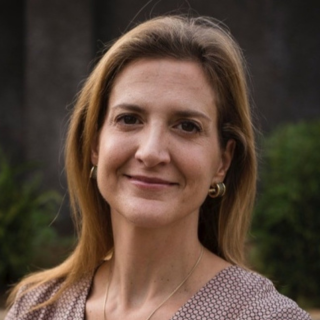
Anne is a health innovation consultant focused on helping organizations turn complex data into practical strategy. She brings over two decades of experience in global health, research, and program evaluation, including more than eleven years at USAID, where she led monitoring and evaluation for major international initiatives, from an $8.4 billion COVID-19 response to health programs spanning more than 40 countries. Earlier in her career she directed clinical research and taught applied program evaluation at Johns Hopkins University.

Catherine is the co-founder of Vecinos+, a community platform created to connect residents across communities, support neighborhood initiatives, and provide easier access to trusted local services, activities, and information. She is also an experienced entrepreneur and business leader who built an IT company in Warsaw valued at PLN 43 million and led a team of more than 90 people, overseeing strategy, operations, growth, and organizational development. Her experience spans technology, nonprofit management, education, and community building.

Bernardo has spent over three years at TiE Boston, one of the city’s leading startup organizations, where he helped run a startup competition for high school students and managed marketing for its startup accelerator, TiE ScaleUp, and its annual startup conference. Before that, he spent six years with the trade agencies at British and Canadian consulates in the United States, and with a Spanish startup, supporting the expansion of companies across the US, UK, Spain, Canada, Türkiye, and Thailand. Recently certified in AI Governance, he helps small businesses strengthen their digital presence and is launching aigovernanceinternational.org.
On select Saturdays, founders join us for 30-minute talks: the honest version of how they built their company, to inspire the students mid-build. If you have a story worth telling, get in touch.

Antonio is CEO & Managing Director of REDI.es, a local operator specialized in high-capacity fiber-optic networks. He brings 25+ years in IT, 20 of them leading teams, plus training in executive coaching.
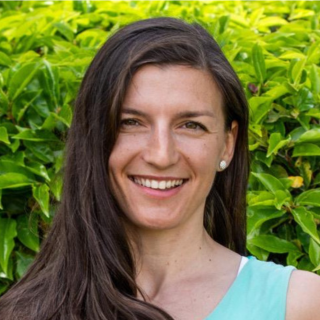
Inese is a Conscious Mind & Body Coach and Co-Founder of Back to Balance Academy, helping women reconnect with their bodies and restore inner balance.
Sponsoring VLC Young Entrepreneurs puts your business in front of an engaged community of families across greater Valencia and directly supports the next generation of local founders. Sponsors are recognized throughout the program and celebrated at Demo Day in June.

The year closes on June 5 with a final event that celebrates the cohort and recognizes the teams who stood out.
Awards are presented across five categories:
The most original and persuasive
concept of
the program.
The project that does
the most
good for its community.
The team that pitched with the
most clarity and confidence.
The business plan most ready to stand on its own in
the real world.
The team that collaborated best
across the school year.
Cash prizes for the winning teams.
Awarded at the final event on June 5.
A certificate of completion.
Awarded upon program completion and successful Demo Day pitch.
Applications are open for the 2026–27 cohort. This first cohort is intentionally small (roughly 16–24 students forming 4–6 teams), so spots are limited. Fill this out together with a parent or guardian and we will be in touch.
Coach one team through the six steps across the school year.
Tell us a little about yourself and we will follow up.
Give a 30-minute talk on a select Saturday and share the
real story behind your company.
Support the next generation of local founders and reach an engaged community of families across the Valencia area. Tell us a little about your business.